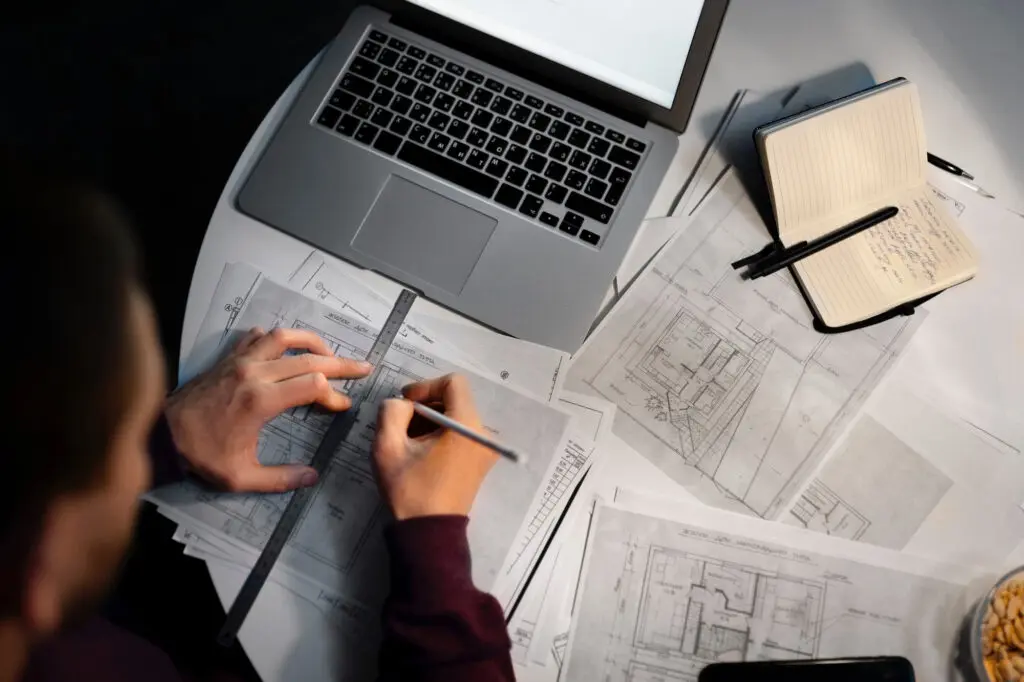
The remote hiring surge among various industries has influenced how employers recruit employees, even for roles that seem impossible to achieve remotely. Ever thought of hiring virtual architects? From the industry’s point of view, architects rely on visual communication and physical site visits. However, the integration of technology into construction has highly influenced the possibility for architects to work and deliver remotely, without needing physical interaction. This is also a great advantage for construction employers as it offers them the flexibility to hire the best talent based on project complexity and source the best talent from anywhere in the world without demographic limitations.
In this article, we explore virtual architects’ role in the construction industry and how employers can design smart without hiring in-house.
In-house vs Virtual Architects
Understanding the fundamental differences between in-house architects and virtual architects is the first step towards making an informed hiring decision. While both hiring models have their significance, the remote working model offers a unique blend of flexibility and expertise, making it more attractive to modern employers.
An in-house architect is directly hired in a construction company and collaborates closely with the larger team to participate in various phases of a project, from conceptualization to facility management. They are committed to the organization’s culture, standards, and long-term goals. While the traditional approach offers immediate accessibility and direct oversight, it also comes with significant overhead costs, including salaries, benefits, and equipment.
Virtual architects, on the other hand, operate remotely, leveraging digital tools to deliver architectural services without physical presence. This model addresses the limitations of traditionally hiring architects, such as hiring on a project basis, flexibility in resource allocation, and accessing global talent pools. Through hiring remote design architects, companies can work with specialized professionals such as sustainable design, historic preservation or smart building technologies, based on project needs.
Virtual Architect Duties
Virtual design architects carry out various responsibilities that match their in-house counterparts while leveraging technology to bridge the physical gap. Here are some duties that they take on that are crucial for employers considering the remote hiring model.
1. Pre-Design and Feasibility Assessment
Remote architects start every assignment with pre-design analysis and feasibility studies. This involves conducting research on zone regulations, assessing environmental constraints, building codes, and site conditions by utilizing digital resources and remote data collection. They analyze customer requirements, budget limitations, and project timelines to determine project viability. Virtual architects collaborate with local surveyors and engineers to understand site conditions without physical visits. The remote approach of pre-design assessment often provides better documentation as remote architects can access historical data, environmental reports, and regulatory information simultaneously.
2. Conceptual Design
The conceptual design stage is where remote architects shine. They leverage visualization tools that help them explore creative possibilities by using 3D modelling software, creating multiple design alternatives that clients can review and compare. In conceptual designing, architects use mood boards, digital sketches, and 3D models to communicate their design process. They conduct virtual sessions with clients to brainstorm on design concepts, allow real-time design exploration, and provide immediate feedback.
3. Schematic Designing
At this phase, virtual architects create detailed floor plans, elevations, and building systems layouts. They utilize Building Information Modeling (BIM) software to develop comprehensive digital models that integrate architectural, structural, and mechanical systems from the early design phases. This phase is essential for establishing the foundation of all subsequent design decisions and ensuring the project aligns with the client’s goals and budget.
4. Developing Construction Documentation
Architects are also tasked with creating comprehensive construction documents and technical specifications. They produce detailed working drawings, sections, details, and schedules using BIM platforms. They also maintain extensive digital libraries of construction details, specifications, and standard practices that can be quickly adapted to specific projects. Some of the documents that virtual architects develop include floor plans, elevations, and sections, mechanical, electrical, and plumbing drawings, and specifications outlining materials and construction methods. They also actively contribute to creating contracts, bidding documents, and managing change orders.
5. Project Visualization
Virtual architects use visualization technology to create presentations and promotional materials. They produce architectural renderings, virtual tours, and interactive 3D models that help clients understand the proposed design. These visualization tools particularly come in handy for investor presentations and public approval processes. Advanced remote architects also use virtual reality (VR) and augmented reality (AR) to offer immersive design experiences. With this technology, clients can virtually walk through proposed spaces, experience different lighting conditions, and understand all plans before construction begins.
6. Quality Assurance
Architects implement quality control procedures to ensure all deliverables meet professional standards and client expectations. They also conduct design reviews, coordinate with peers, and utilize digital checking tools to identify potential conflicts or errors before releasing documents. Quality assurance also extends to ensuring compliance of all documents to building codes, accessibility requirements, and industry standards.
Top Skills Every Good Virtual Architect Must Possess
Every good virtual architect needs a blend of technical proficiency and strong soft skills. However, there are specific skills that enable effective remote collaboration and project delivery.
1. BIM Software proficiency
BIM Software proficiency stands as the cornerstone skill for any successful virtual architect. Mastering platforms like Autodesk, ArchiCAD, and Vectorworks is essential for creating comprehensive 3D building models that integrate architectural, structural, and MEP systems. Proficiency with BIM systems also translates to the quality of output and the consistency in developing high-quality projects.
2. Digital Communication excellence
Digital communication excellence for virtual architects is a must-have skill. Owing to their nature of remote work and lack of physical connection with clients, architects are required to possess both verbal and written communication abilities. In addition, communication is key in breaking down the complex designs and layouts to end clients more simply and understandably. Digital communication excellence in architecture is also portrayed in their ability to create compelling visual presentations that clients can understand and relate to.
3. Project management
Remote architects coordinate complex projects at different stages and across distributed teams. Proficiency in project management software to create detailed schedules, track deliverables, and monitor project progress is crucial to the success of the role. Architects also must be skilled in resource allocation, deadline management, and risk assessment, and should understand critical path analysis, task dependencies, and optimizing schedules to ensure timely delivery.
4. Teamwork and collaboration
Virtual architects need to integrate seamlessly with other team members, whether they are working on a project basis or full-time. Architects work closely with engineers, contractors, clients, and other consultants to deliver on projects. Having strong collaboration and teamwork skills is essential to ensure the holistic success of projects and integration with the company goals and objectives.
Top Tips for Hiring Virtual Architects That Every Employer Must Know
Hiring a remote professional for a very critical role, such as an architect, requires a deliberate and strategic process. Here are some tips to help you find the right talent and set your project up for success.
- Create a well-developed project brief even before you start looking and include your goals, budget, timeline, and required deliverables. Hiring a remote architect should not feel like hiring any other administrative assistant, but rather a more clear, direct, and comprehensive approach.
- Be clear on the tools and platforms that you are already using and willing to provide to the virtual architect to assess compatibility and proficiency. It is also important to agree on a tool from day one to ensure follow-through.
- Start with smaller tasks instead to help build trust and correct compatibility and specialization mistakes before moving to the bigger projects. This also helps you as an employer to build a relationship with your virtual architect and establish a working pattern.
- Establish clear communication protocols including regular check-in schedules, progress reporting formats, and escalation procedures for issues or concerns. Establishing clear communication is essential for building virtual collaboration in a remote workplace.
- Consider time zone compatibility and the impact any differences will have on project timelines and communication. While accessing global talent is greatly advantageous, wide zone differences can sometimes complicate urgent decision-making and customer service, especially for client-facing tasks such as presentations.
Take the next Step with Remote Raven
Virtual design architects represented a transformative approach to architectural services. For employers in the construction industry, remote architects are the next game changers in ensuring timely and quality project delivery, as they present better technological expertise, specialization, and cost savings compared to the traditional hiring model.
With Remote Raven, you can be assured of a robust and detailed hiring process that will produce the right candidate for your construction project. Ready to design your projects successfully without hiring in-house? Contact us today to get started.