Every business owner wants the same thing: do more with less. That is why virtual assistants (VAs) have become indispensable to companies of every size. Now, with the rise of AI virtual assistant services, the equation just got even more compelling.
But here is the question every business owner is asking right now: Is AI coming for my VA’s job? The answer is no — and this guide will show you exactly why.
Whether you are considering hiring a virtual assistant for the first time or looking to get more from your existing remote team, this article breaks down how AI is reshaping the VA industry, which tasks it handles best, and why the most effective businesses in 2026 are combining AI tools with skilled human VAs to unlock a new tier of productivity.
What Are AI Virtual Assistant Services — And Why Do They Matter?
AI virtual assistant services combine artificial intelligence technologies with the skills of human virtual assistants to deliver faster, smarter, and more scalable business support. Rather than replacing human judgment, AI acts as a force multiplier — automating the repetitive, speeding up the analytical, and freeing skilled VAs to do the work that truly requires a human touch.
The core AI technologies powering this shift include:
- Machine Learning (ML): Systems that learn from data and improve accuracy over time — making AI tools smarter the more they are used.
- Natural Language Processing (NLP): The technology behind AI chatbots and smart communication tools that understand and respond in human language.
- Robotic Process Automation (RPA): Automated handling of rule-based tasks like data entry, invoicing, and file organization — eliminating manual errors at scale.
- Predictive Analytics: AI-driven insights from historical data that help businesses make faster, better-informed decisions.
- Deep Learning: Neural networks that handle increasingly complex tasks — from sentiment analysis to fraud detection.
Together, these technologies form the backbone of modern AI-powered virtual assistant services — and they are already reshaping how remote teams operate.
6 Ways AI Is Transforming Virtual Assistant Productivity Right Now
Here is a practical breakdown of how AI is already being deployed in high-performing virtual assistant workflows:
1. Automated Communication and 24/7 Customer Support
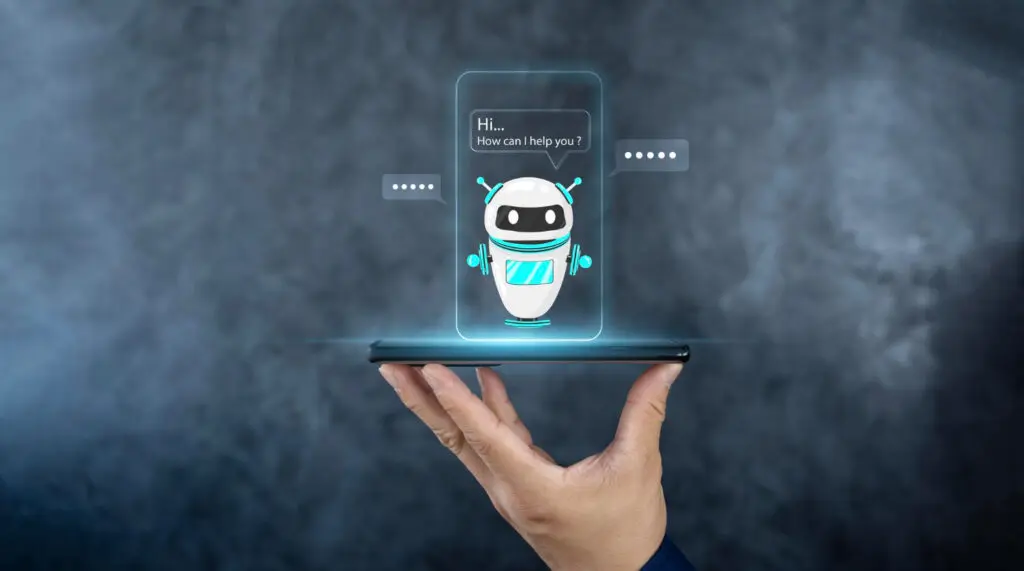
AI-powered chatbots and virtual customer representatives handle routine enquiries around the clock — using NLP to understand questions, deliver accurate responses, and resolve basic issues without human intervention. The result: your business stays responsive even when your team is offline.
2. Calendar, Scheduling, and Administrative Automation
Scheduling conflicts, email backlogs, and appointment management eat hours that business owners and executives cannot afford to lose. AI tools automate these processes with precision — and when paired with a skilled human VA, the result is a seamlessly managed calendar and inbox with zero oversight required from you.
3. Hyper-Personalized Customer Experiences
AI recommendation engines analyze customer behavior to deliver tailored product suggestions and content. Sentiment analysis tools read the emotional tone behind customer messages — enabling human VAs to respond with exactly the right level of empathy and urgency. This combination drives loyalty and repeat business at scale.
4. Real-Time Analytics and Smarter Decision-Making
5. Multilingual Support and Global Reach
AI translation and multilingual chatbot tools eliminate language barriers — allowing your business to support international customers without hiring additional staff. Your human VA manages the relationship; AI handles the linguistic complexity.
6. Security Monitoring and Compliance
AI security tools detect irregular patterns, flag potential fraud, and monitor regulatory compliance in real time. For businesses in finance, healthcare, or legal services, this layer of automated protection is no longer a luxury — it is a necessity.
Will AI Replace Virtual Assistants? Here Is the Real Answer.
This is the question every VA and business owner is asking. The evidence is clear: AI will not replace skilled human virtual assistants. Here is why the combination outperforms either alone:
AI Handles Volume. Humans Handle Complexity.
AI excels at high-volume, repetitive, rule-based tasks. Human VAs excel at nuanced judgment, creative problem-solving, and relationship management. When AI absorbs the former, human VAs elevate to the latter — producing better outcomes for your business at every level.
AI Augments Human Capabilities — Not the Other Way Around
VAs who master AI tools do not just maintain their value — they multiply it. Advanced analytics, real-time language processing, and automated communication support give human VAs capabilities that simply were not available five years ago. The VA who embraces AI becomes a significantly more powerful asset to your business.
The Customer Experience Advantage
The most exceptional customer experiences in 2026 are not delivered by AI alone or humans alone — they are delivered by both working in concert. AI handles fast, consistent first-response interactions. Human VAs step in for complex, sensitive, or high-stakes situations. The result is a seamless experience that outperforms any single-channel approach.
Opportunities for VAs in an AI-Powered World
Far from contracting the VA industry, AI is expanding it — and elevating the nature of the work:
- Higher-value roles: Project management, business analysis, and AI system oversight are emerging as premium VA specializations.
- AI model training and management: Human VAs are increasingly needed to oversee, correct, and improve AI systems — a skill set in high demand.
- Strategic advisory roles: With AI handling execution, human VAs are being trusted with higher-order tasks that directly impact business growth.
The irreplaceable element remains unchanged: empathy, cultural nuance, ethical judgment, and genuine human connection. AI cannot replicate these — and businesses that depend on strong client relationships will always need skilled human VAs to deliver them.
AI-Powered Virtual Assistants From Remote Raven: The Smart Choice for Growing Businesses
Remote Raven hosts the largest vetted pool of virtual assistants from the Philippines — professionals who are trained in the latest AI tools and ready to deliver smarter, faster support from day one.
With over a decade of experience placing top VAs with US companies of all sizes, Remote Raven has guided clients through every major shift in the VA industry. We have seen firsthand how AI-powered virtual assistant services elevate what a skilled human VA can achieve — and we are committed to putting that advantage to work for your business.
Ready to unlock the full potential of AI virtual assistant services for your business? Book a free consultation with Remote Raven today and discover what the right VA — powered by the right AI tools — can do for your bottom line.
Frequently Asked Questions: AI Virtual Assistant Services
Q1: What is the difference between an AI chatbot and a human virtual assistant?
An AI chatbot automates specific, rule-based interactions — answering FAQs, routing requests, or processing simple transactions. A human virtual assistant brings judgment, creativity, emotional intelligence, and strategic thinking that AI cannot replicate. The most effective approach combines both: AI for speed and volume, human VAs for complexity and relationship-building. Remote Raven VAs are trained to leverage both.
Q2: Will AI replace virtual assistants in the next five years?
No — the evidence points in the opposite direction. AI is increasing demand for skilled VAs by creating new, higher-value roles that require human judgment. The VA industry is projected to grow to over $8.6 billion by 2030. Businesses that combine AI efficiency with human expertise consistently outperform those relying on either alone.
Q3: How do AI-powered virtual assistants improve business productivity?
AI-powered VAs automate time-consuming tasks (data entry, email sorting, scheduling), provide 24/7 customer support, deliver real-time performance analytics, and personalize customer interactions at scale — all without increasing your headcount. The result is a measurable uplift in output, quality, and customer satisfaction.
Q4: What tasks can AI virtual assistant services handle?
AI handles email triage, calendar scheduling, customer chat, data entry, language translation, sentiment analysis, compliance monitoring, fraud detection, and predictive analytics. For tasks requiring creativity, empathy, and complex decision-making, human VAs remain the gold standard — and Remote Raven VAs are equipped to do both.
Q5: How do I know if my business is ready for AI virtual assistant services?
If your team spends significant time on repetitive tasks, struggles to provide consistent out-of-hours support, or needs to scale without proportionally increasing costs, you are ready. Businesses of any size benefit — not just large enterprises. Remote Raven offers a free consultation to identify exactly where AI-powered VAs will deliver the greatest impact for your specific situation.
Q6: How does Remote Raven integrate AI into its virtual assistant services?
Remote Raven VAs are trained in the latest AI tools for task automation, communication management, data analytics, and customer personalization. They bring both technical AI proficiency and the human judgment that AI alone cannot provide. With over a decade connecting top Filipino VAs with US businesses, Remote Raven continuously evolves its approach to keep clients ahead of the curve.
Q7: How quickly can I get started with a Remote Raven VA?
Getting started is straightforward. Visit hireremoteraven.com and book a free consultation. The Remote Raven team will assess your needs, identify the highest-impact tasks to delegate, and match you with a vetted VA trained in the AI tools your business requires. No long-term commitment is required to begin.